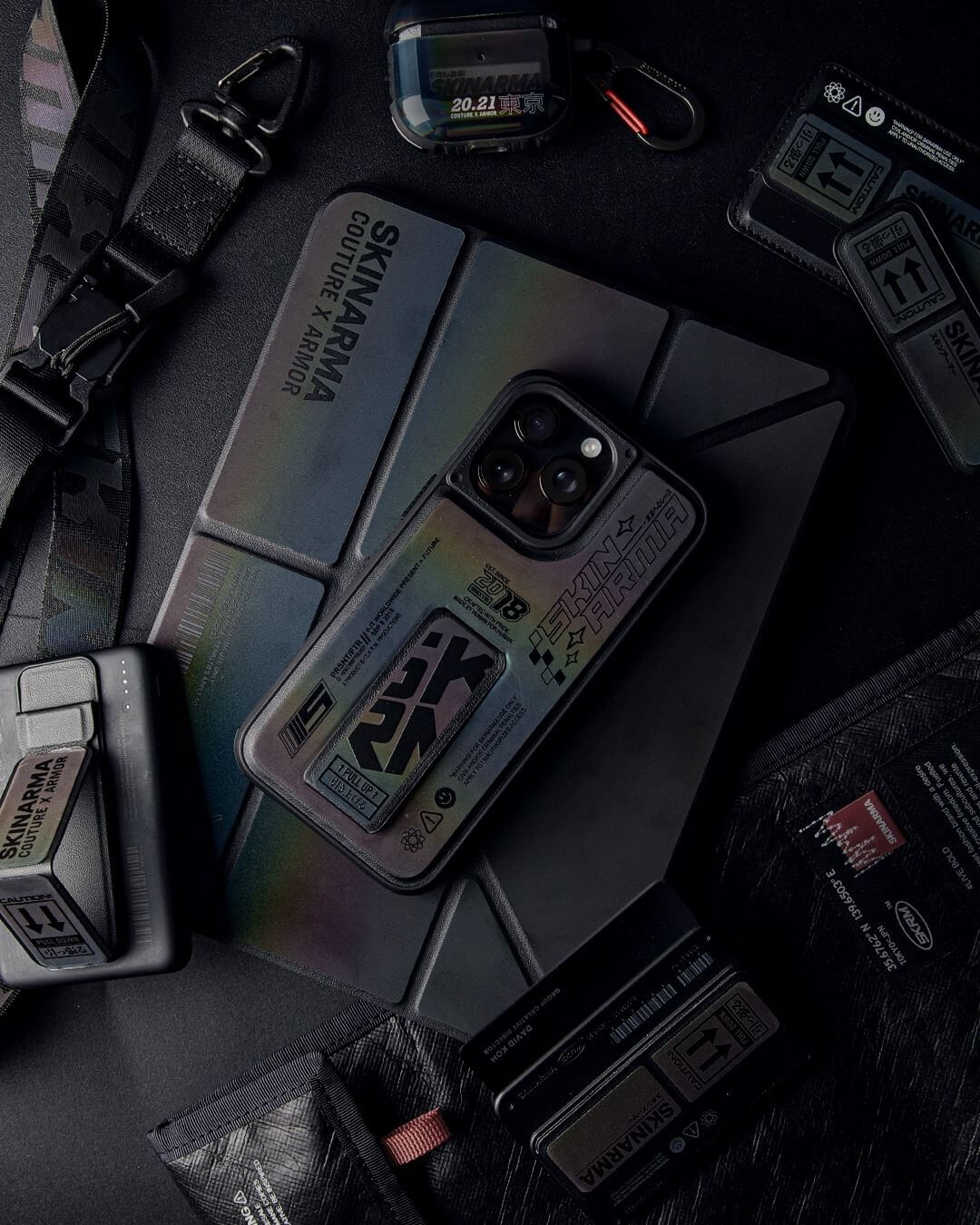
Streetwear has always had a habit of rescuing things from the past. Sometimes that means a silhouette, or a color. Other times, it is a piece of hardware that spent a decade looking hopelessly dated before turning up on a bag, belt loop, or runway—and suddenly feeling as if a celebrity co-sign had dragged it straight back into the zeitgeist.
Accessories are especially good at this because the habits behind them never fully disappear. We still want our essentials close, our hands free, and with enough detail to make a look feel personal. What changes is the object being carried. The wallet chain becomes a carabiner, the lanyard picks up a phone… the forms change, but the functions, they stay.
Wallet Chains → Carabiners and Utility Clips

Wallet chains were practical before they became stylistic. Bikers used them to keep wallets tethered to the body, punk folded the chain into its hardware-heavy wardrobe, and by the late ’90s and early 2000s it had become a fixture on baggy jeans across skate, metal and mall-era youth culture.
The chain faded, but the instinct stuck around. Carabiners took its place on belt loops and bags, turning keys, AirPods cases and small pouches into part of the outfit. Utility clips push the idea further, borrowing from workwear and outdoor gear to create attachment points wherever they are needed.
The physical parts have evolved and the cargo is different, but the appeal is much the same: everyday objects move outside the pocket, letting function become part of the styling.
SEE WHAT’S HANGING OFF THESE ACCESSORIES
Neck Lanyards → Phone Straps (And Still Lanyards)

Lanyards spent years trapped in offices, schools, trade shows and any building where someone needed proof you were allowed through the door. Fashion eventually noticed that the format itself was useful. By the mid-2010s, designers including Louis Vuitton and Fendi were putting wallets and phone cases on neck straps, nudging the lanyard beyond the access card.
That shift looks even more obvious now that the phone has become the object we reach for most. A neck strap or crossbody lanyard keeps it accessible without forcing it into a pocket, and the strap itself becomes another visible line across the outfit. The old badge-holder association has not completely disappeared, which is probably part of the charm. But we do admit, there is something satisfying about turning an accessory associated with corporate ID cards into a way of carrying your phone to a gig.
SEE LANYARDS AFTER OFFICE HOURS
The Walkman Holster → The Phone Case

Portable electronics used to arrive with their own wardrobe problems. A Walkman might clip onto a waistband, sit in a belt pouch, or hang from a strap while its headphone cable snaked through the outfit. Carrying the device was part of using it, so its hardware became part of the default look.
The smartphone removed most of that clutter by absorbing the music player, camera, map, wallet, notebook and several other objects into one slab of glass. Ironically, that made the case around it far more important. Once the phone became the one piece of technology almost everyone carries, its case started doing the work that holsters, clips, sleeves and protective shells used to split between several devices. And now, they’re made to look good.
DRESS THE DEVICE YOU CARRY EVERYWHERE
The Utility Belt → Modular Carry

The utility belt has been reinvented enough times to prove the idea was sound from the start. Soldiers, tradespeople, photographers, hikers and cyclists have all relied on versions of the same system: keep frequently used objects within reach, then give each one a place to live.
Streetwear borrowed that logic long ago through cargo pockets, tactical webbing, chest rigs and belt bags, but the current version is becoming even more modular. Instead of committing to one large bag or belt, people are building smaller combinations around clips, straps, pouches, cases and attachment points. One piece carries earbuds, while another holds cards. Keys also have a newly attained freedom to move to the outside of a bag, because digging for them at the bottom feels too cumbersome for the 21st century.
It is a system that can expand or shrink depending on the day, which also makes it useful for styling. The arrangement becomes part of the outfit because you decide what stays visible and where it sits.
BUILD YOUR OWN CARRY SYSTEM
Bag Charms Made Room for More — Earbud Cases, Mini Pouches and Phone Charms

Bag charms have returned with enough force that they have started pulling other accessories back with them. Plush toys, beads, keychains, ribbons and trinkets have been piling onto bags again across street style, helped along by the recent appetite for personalization and the rise of collectible charms.
The interesting part is how quickly the decorative cluster became practical. Earbud cases now sit comfortably beside plush charms, turning a piece of tech protection into another hanging object. Mini pouches earn their place by carrying cards, lip balm, or other pocket-sized necessities. Phone charms, meanwhile, are escaping the phone entirely and migrating onto bags, straps and belt loops.
That collision between useful and frivolous is what gives the trend its second wind.
SEE CHARMS THAT DO MORE THAN DANGLE
The Future of Accessories Looks Suspiciously Familiar
Modern technology keeps consolidating objects, only for fashion to build a fresh ecosystem around whatever survives. The phone replaced the camera, music player, map, ticket and wallet, then accumulated its own case, strap, charm, grip and pouch.
That is why retro formats keep returning. Their original cargo may be obsolete, but the hardware still solves a problem. A clip still clips. A strap still frees a hand. A pouch still gives a small object somewhere to live.
For SKINARMA, that makes the comeback feel less nostalgic than practical—familiar formats, current tech and plenty of places left to clip something on.
See what came back at SKINARMA.com.