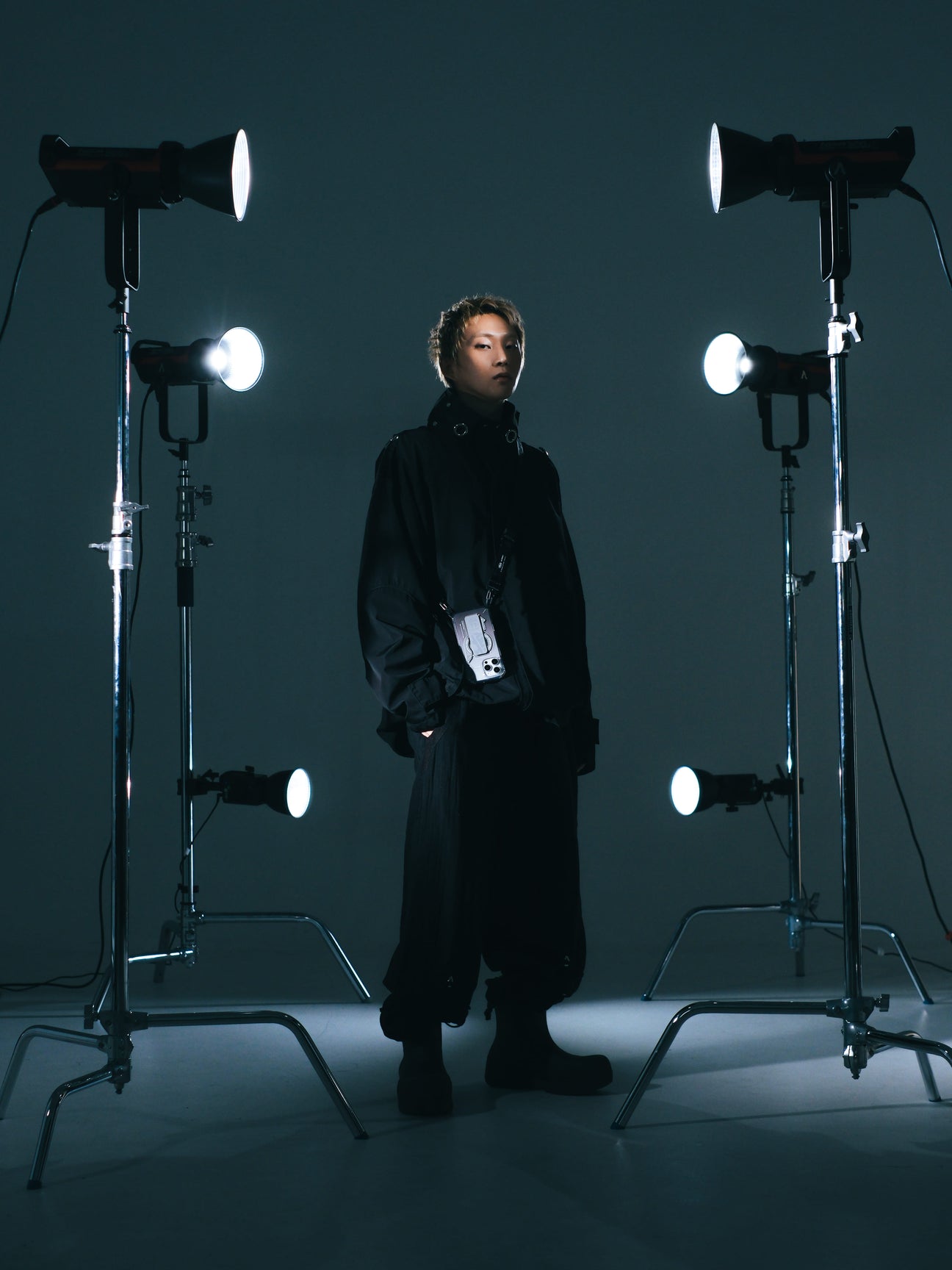
What separates the tastemakers from the trend-followers? Credentials help. A come-up story helps more. But the real differentiator, the thing that produces work with depth and staying power, is often a reading habit. Street culture built itself on observation and self-education even before it got co-signed by luxury. It’s why the culture’s most enduring figures—the ones whose output still gets referenced a decade later—tend to have a bookshelf that explains a lot.
Written in honour of World Book Day on 23 April 2026, because the culture has always had a reading list, even if it never called it that.
Streetwear’s Obsession with Ideas
Streetwear grew out of communities who couldn’t rely on institutions to tell their stories, so they told them through graffiti tags on subway cars, rap lyrics dense enough for annotation, and zines passed hand to hand in parking lots. Safe to say, they can’t be dismissed as casual pastimes, like reading Kafka while on sabbatical. Graffiti writers developed full visual alphabets and studied each other’s letterforms with the devotion of type designers. Jay-Z, by his own account, read the dictionary in his spare time to sharpen his vocabulary for rap battles. It’s less a quirky side habit and more the same competitive intent a chess player brings to studying endgames.
The culture had its own intellectual standards, rigorously maintained and entirely self-governed. And it produced, as a matter of course, some of the most consequential creative thinkers of the last 30 years.
When Fashion Started Taking Reading Seriously
In 2009, Kanye West secured an internship at Fendi in Rome, not for the credential, not for the press, but because he wanted to understand how luxury worked from the inside (never mind his own confession that he did nothing). He was, at the time, one of the most successful musicians on the planet. The gesture, however unproductive, was telling of how visibly these worlds were beginning to collide.
He wasn’t alone. For most of the 20th century, luxury and streetwear had agreed without much discussion to occupy opposite ends of the room. But while that arrangement held formally, the intellectual traffic was already moving in one direction: streetwear figures were studying luxury’s craft, its history, its design language, absorbing it on their own terms. By 2017, when Supreme and Louis Vuitton unveiled their collaboration on Paris Fashion Week’s most watched runway, the same house that had once sent cease-and-desists was now sharing a stage with what was once only a skateboard brand.
That it landed with genuine credibility on both sides owed everything to the figures driving it, people who arrived not just with cultural clout, but with architecture degrees, theology that informed entire brand philosophies, and bookshelves that had clearly seen some use.
For a long time now, the best-dressed people in the room have also been the best-read.
Where Streetwear Meets the Reading List
Pharrell Williams
Pharrell Williams operates at the crossroads of art, design, popular culture and street savvy, playing off disciplines, namely music, fashion and design, and using each as an element in the other. His 2012 book Places and Spaces I’ve Been documented conversations he held with figures ranging from Anna Wintour and Buzz Aldrin to other innovators beyond fashion, telling you everything about how broadly he reads the room. A man who co-founded Billionaire Boys Club, co-produced Kendrick Lamar’s “Alright”, and eventually took the creative director seat at Louis Vuitton didn’t get there on vibes alone.
Virgil Abloh
Meanwhile, Abloh showed what happens when a theorist is handed a runway. He went to Chicago to study architecture, a field that influenced the way he engaged with his own creativity and the imaginings of others, and the city introduced him to the buildings of Ludwig Mies van der Rohe, whose architectural legacy would later echo in his design thinking. Abloh brought that structural rigor into everything he touched: Off-White, his Nike collaborations, his tenure at Louis Vuitton. His 500-page monograph Figures of Speech remains one of the most serious documents streetwear has ever produced.
Jay-Z
The theoretical end of the spectrum and the street end are not as far apart as people assume, which Jay-Z spent a career demonstrating. He spent free time reading the dictionary, building his vocabulary for rap battles, and that habit didn’t stop when Marcy was behind him. His 2010 book Decoded argues, methodically and with annotated lyrics, that rap is a form of poetry. He also cited Seth Godin and Malcolm Gladwell among the books he lives by. The man thinks in systems, which is why he’s still the reference point 30 years into the conversation.
Tyler, The Creator
If Jay-Z represents the word-as-weapon tradition, Tyler, The Creator represents the world-building one. His creative project, Golf Wang included, is rooted in a kind of obsessive self-directed study. He’s stated that Barnes & Noble was where he went, and that he loved books when he was younger. That same appetite for narrative and internal logic runs through his albums: Igor, Call Me If You Get Lost, Chromakopia. Each one is a fully realized concept with its own rules.
Jerry Lorenzo
And finally, the argument completes itself with Jerry Lorenzo, whose reading habit is the most literally foundational of all. When Lorenzo was young, he and his family read daily devotionals together, frequently studying My Utmost for His Highest by Oswald Chambers, and that text directly inspired the name Fear of God. The theology running through the brand’s DNA was always load-bearing, not atmospheric. Lorenzo holds an MBA from Loyola University Chicago, and his approach to building Fear of God, studying production, branding and consumer psychology entirely self-taught, reflects someone with a researcher’s patience.
Reading as Cultural Currency
Look at that list again. An architect, a dictionary reader, a world-builder, a devotional student, and a man who can hold a conversation with Buzz Aldrin and Kanye West in the same book. What they share isn’t a genre of reading or a definitive school of thought, but the habit of going to the source material, and of building their frameworks on something more durable than the last thing that was trending.
Cultural capital requires deposits, and you can’t reference what you haven’t encountered. The brands and bodies of work that have lasted in this space are those built on ideas that were stress-tested somewhere arguably more somber than Instagram—such as in books, lecture halls and annotated margins.
Style Should Have Substance
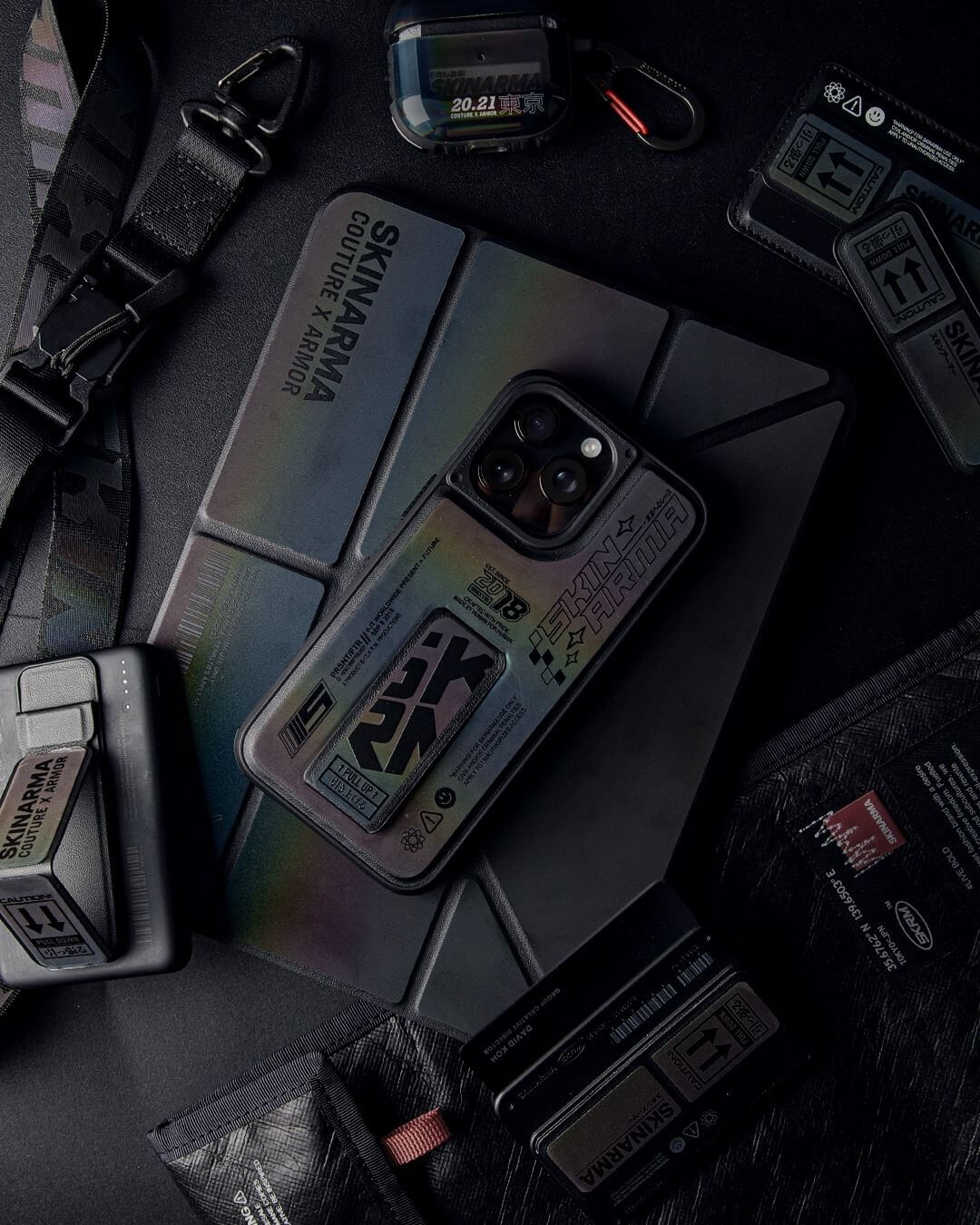
If the ideas live on devices now, those devices deserve to be treated accordingly. Here are two products worth knowing about, for anyone who takes both their reading and their output seriously.
TRAX

The reMarkable Paper Pro is built to replace paper entirely, which makes it the natural home for the kind of note-taking, annotating and margin-filling that serious reading demands. The TRAX folio keeps it protected through the city movement that serious work demands, with a splash-proof exterior, soft inner lining and a bi-fold cover that snaps into a stand for hands-free use at a lifted angle. Everything else about it disappears into the workflow, which is the highest compliment you can pay a well-designed object.
VIEW TRAX FOR REMARKABLE PAPER PRO 11.8”
ALSO AVAILABLE FOR KINDLE PAPERWHITE 12TH GEN | KINDLE 11TH GEN | KINDLE SCRIBE 2ND GEN
SERIX

Not every reading session happens at a desk with good light and nowhere to be. Most of the best ones don’t. The SERIX exterior handles whatever condition the weather report throws at it, while the soft inner lining takes care of the screen. Find a surface, fold the cover back, and it becomes a stand without having to adjust or prop it up with what’s in arm’s reach. Bonus: it’s slim enough for a jacket pocket, which for a device you carry this often, is the detail that earns its keep.
VIEW SERIX FOR KINDLE PAPERWHITE 12TH GEN | KINDLE 11TH GEN
Great Style Starts With Curiosity
Curiosity is the unfakeable ingredient. You can buy the right shoes, study the right archives, and still produce work that feels hollow, because the reference is visible but the understanding isn’t. The people in this piece were curious, and that curiosity had a reading habit underneath it. After all, good taste is just well-processed information.
Start with the books, protect the devices you read them on, and see what you build from there. The rest of our tech collection is waiting for you on our website. We welcome you, the curious and the well-dressed.