Streetwear is not complicated, but buying it well is a skill. Not because the rules are an underground secret, but because most of the conversation around it is built on consumer culture: hype cycles, resale prices, and the kind of co-signs that get buried by the next magazine issue, and the one after that.
Capitalism is good at keeping your eyes on the wrong thing. But there’s a more considered way to shop, from where a logo sits on a jacket to what it means when a brand embraces a lull for a couple of months. Here at SKINARMA, we consider it our duty to teach you how to read the signs—the real ones that aren’t manufactured for you to “find”.
Track who is wearing it before how many are wearing it
In 2011, a small group of London skaters were wearing Palace before the brand had a website. There was no need for campaigns, seeding or PR. All it took was a logo that kept appearing in skate footage and on people whose taste you trusted. That’s the pattern worth learning to spot. Pay attention to stylists, photographers, and musicians who aren’t household names yet. When a brand starts showing up on people unprompted, it means it’s finding its way into lived-in wardrobes rather than being placed there by a budget. The wave will come later, and you’ll have seen it coming.
Judge a brand by its worst piece, not its best
Everyone has a greatest hit. The problem is if it’s merely a one-hit wonder. Pull back from the hero product and look at what fills the rest of a brand’s season, be it the accessories, category extensions, or collaborations that feel slightly off brief. Supreme’s accessory range has always been a useful litmus test here. The serious buyers engage with the full range and can articulate why even the stranger items make sense within Supreme’s wider language. The ones just buying the box logo tend to lose interest the moment a season doesn’t deliver an obvious centerpiece. A brand worth following rewards that kind of broader attention.
See the value in both drops and leftovers
Before the lo-life movement recontextualized Polo Ralph Lauren in the late ’80s and early ’90s, those pieces might have been found in thrift stores for next to nothing. The construction was there, the design was there, but what wasn’t there yet was the cultural permission to pay attention to it. That kind of history repeats itself more than people realize. Pre-hype Carhartt WIP and certain New Balance models sat on shelves for years before a collaboration made them desirable, and none of them came with a countdown timer. A leftover rack is just a drop that didn’t get the right press at the right moment. Fortuitous context, if you will.
If resale culture loves it, question it
When the Travis Scott Air Jordan 1 dropped in 2019, the resale markup was steep and instant. It also became one of the most ubiquitous sneakers of the following years, featuring on every hype account, weaseling into every “best of” list, squirreling onto every airport carousel. But resale heat and cultural longevity are not the same metric and treating them as such is how wardrobes end up feeling dated fast. When StockX prices spike on something, it tells you more about demand than about whether a piece is good, considered, or built to last. Don’t let the market make decisions for you.
Take note of brand silence
Maison Margiela spent years barely advertising. The brand kept its head down, avoided celebrity placements, and never seemed particularly interested in courting the moment. Instead the clothes found their audience slowly, through people who were already looking carefully, and that audience stuck around. Brands that move at that pace tend to have a clearer sense of what they’re doing and why. As someone paying attention, that steadiness is one of the clearest signals a brand can send.
Pay attention to where branding is placed (not how big it is)
Pull the collar of a Comme des Garçons piece back and you’ll often find more considered detail in that one inch of fabric than across the entire front face of a louder brand’s flagship piece. Branding placed unexpectedly, such as inside a collar, along a seam, or on the back hem, can reflect a garment designed with the wearer in mind first. Oversized, centered logos earn their place when the rest of the garment holds up to the same level of scrutiny. That’s worth clocking before you buy.
Safe brands can have “weird” choices too
How well do you actually know the brands you think you’ve figured out? New Balance, a brand most people associate with function over fashion, has quietly built a collaborative archive with Joe Freshgoods, Salehe Bembury, and Teddy Santis that sits well outside any dad-shoe narrative. Nike greenlit the HTM collaborations, which is a series of experimental silhouettes with no obvious commercial logic, while simultaneously selling Air Force 1s at every mall in America. The catalog is always wider than the reputation suggests. After all, New Balance has been showing up dressed like a family member for decades. And it still somehow has the best lines.
Follow styling shifts rather than new items
Cast your mind back to when baggy jeans came back. For a while it was just individuals pulling out old pairs, wearing things looser, letting the silhouette breathe in ways that felt personal rather than prescribed. The brands eventually codified it into collections and called it a trend, but by then it had been silently brewing for the better part of a few years. Watching how people style what they already own tends to tell you more about where things are heading than any new release does.
Organic interest speaks volumes
When was the last time you noticed someone wearing something and felt compelled to look it up? Chances are they weren’t doing anything deliberate, and it was just a piece that existed naturally in their outfit, worn in and without performance. That’s what genuine brand pull looks like in practice. Sponsored posts and unboxing content have their own visibility, but they exist within a closed loop—the audience reached is the audience that was promised. A brand that keeps showing up outside its own echo chamber, on people who weren’t sent anything, is a brand that has worked its way into something more sustainable.
A collectible can be wearable, and vice versa

There’s a pair of 1985 Air Jordan 1s that sold at auction for over $560,000. A shoe that, once it passed hands, nobody dared put on again. Cultural significance aside (it was worn in a game by Michael Jordan), it’s also a shoe that never got to be a shoe. This same fate befalls many other more ordinary acquisitions. The reverence around keeping things unworn tends to flatten the actual experience of owning something well-made. Some of the most collectible pieces in streetwear history are more interesting for having been worn, like vintage BAPE or certain Vans colorways that only develop character with time. A well-constructed everyday piece holds its value the same way. So wear the thing, because that’s the point.
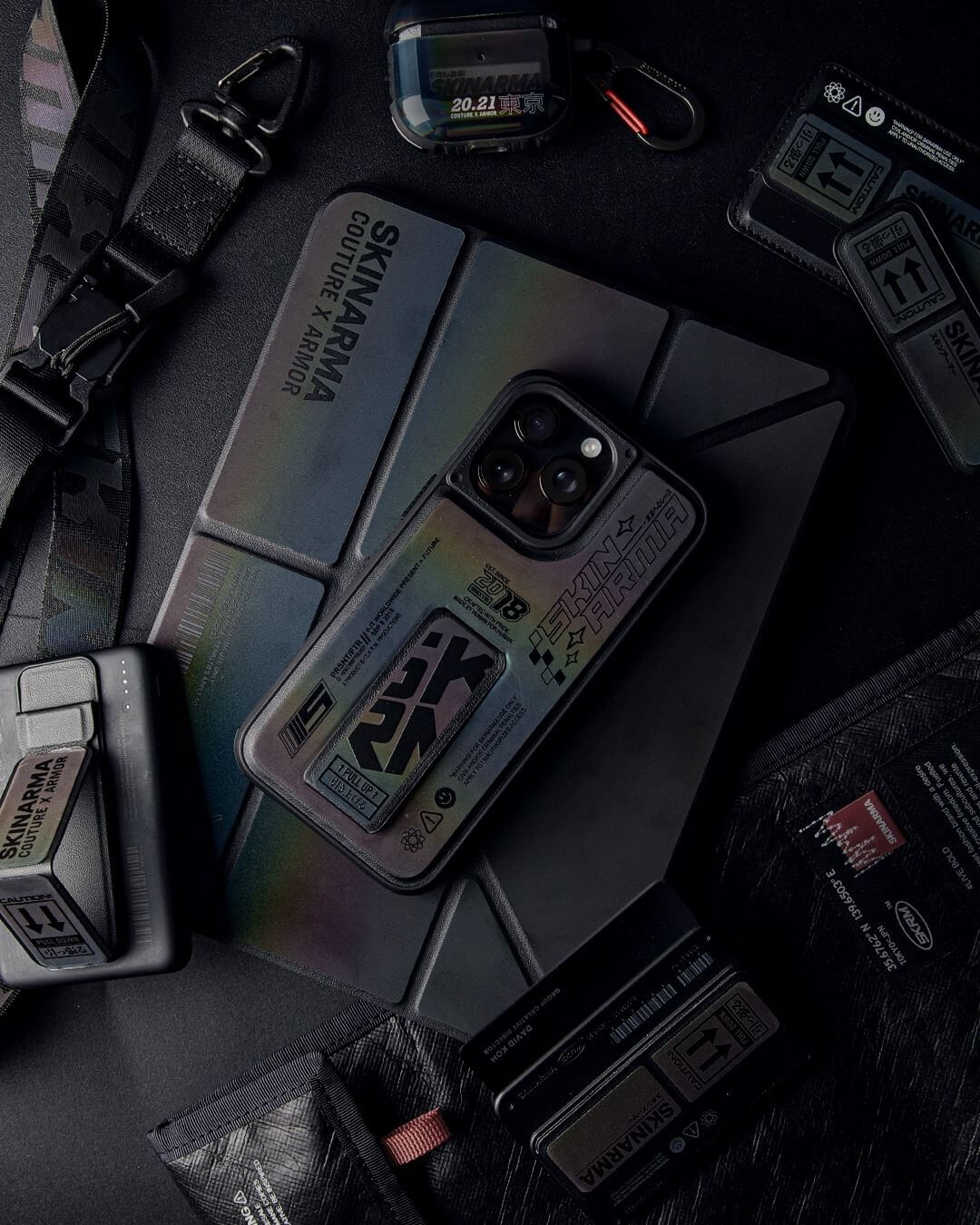
And here, we’re here to tell you it’s not a principle that stops at the hem of a jacket or sole of a shoe. A bag that’s been everywhere with you, a phone case that’s taken its knocks, a cardholder that’s logged the miles—these make character, the same kind that makes a vintage piece worth having. We, SKINARMA, sit in that space deliberately.
Designed to be worth keeping and using, see it all on our website.